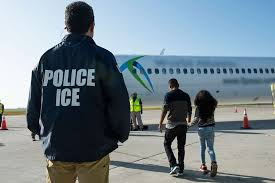
As of March 23rd of this year, ICE agents have been deployed to major U.S. airports to assist with long security lines caused by TSA staffing shortages during the partial government shutdown. Approximately 14 major airports were selected, tasked with patrolling, crowd control, and assisting line management. However, questions and concerns remain regarding whether it will be safe to travel, how long ICE will stay, and if it will eventually expand to local airports.
The major question is why ICE agents have been deployed to airports, and the answer lies in the partial government shutdown that occurred February 14th of this year, as a result of the Department of Homeland Security shutting down over immigration enforcement tactics. It has lasted nearly 54 days as of April 9th, making the longest shutdown in U.S. history. According to NBC News, nearly 500 TSA Agents have quit their jobs since the shutdowns after going without pay. Angela Grana, a Transportation Security Administration Officer, says, “It’s been a constant battle to stay alive financially.”
Many TSA agents have been struggling financially to pay debts and bills, preventing them from returning to work, and for many it is not so simple to get another job to supplement income. Rather than paying the TSA Agents, the President of the American Federation of Government Employees has said the administration has sent ICE to airports as “replacement workers.” The tax paid when getting a boarding pass does not go towards the budget or pay of transportation officers, as stated by PBS News.
What does ICE’s appearance in airports mean for travelers? While ICE has been said to have been sent to help control crowds, assist in managing lines, checking travel documents and IDs, and helping people with bags, it has also been said it has caused increased anxiety, longer security, and targeted passenger profiling and arrests. As reported by CNN, just before ICE agents were sent to aid TSA, two people were arrested by federal agents. This has increased worries and the anxiety of foreign travelers, immigrants, and naturalized citizens, fearing that they will be a target of arrests. In addition, TSA officers who were immigrants are concerned they will be detained if they go to work. We Are CASA, one of the largest immigrant and working-class advocacy organizations in the world have shared their concern, saying, “We Are CASA has received reports from community members describing ICE agents operating inside airport terminals, creating fear and confusion among travelers, particularly within immigrant communities.”
Colorado airports have not been a target of ICE deployment, with the Denver International Airport and Grand Junction Regional Airport being empty of ICE agents. However, there has still been plenty of ICE activity in Mesa County, with 240 arrests and most occurring in the Grand Junction area as of the end of last year. According to The Daily Sentinel, the majority of detainees were not convicted of crimes at the time of their arrest. Refugio Ramirez Ovando, for example; a local resident of Grand Junction for nearly 20 years, was arrested by ICE without a warrant on his way to the construction company he worked for. He was held at the detention center in Aurora for more than 90 days before authorities released him, saying he was detained by mistake.
As of March 30th, TSA officers have received their first paycheck after 44 days without pay. However, it still remains a mystery if ICE agents will remain at airports. “”It depends on how many TSA agents come back to work and how many TSA agents have actually quit and have no plan of coming back to work,” says border czar Tom Homan. For now, the Western Slope remains unimpacted by ICE despite TSA staff shortages, but the situation continues to evolve, leaving travelers and officials alike to watch for what comes next.