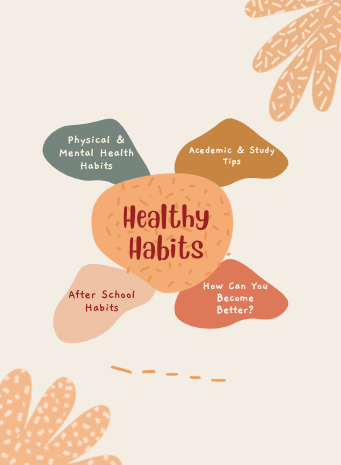
Finding good habits and figuring out the good from the bad may be a struggle for some high school students. In this story we can take a look at some ways you can improve your habits, such as, physical and mental health, academic and study habits, and even some tips from high schoolers.
Healthy Habits
- Being Active
Being active as a teenager can help build a foundation for lifelong health, and strengthen bones and muscles. By building the habit of working out weekly or daily you are making it easier for when you become an adult and may have a harder time doing these simple workouts, such as a squat or push up. An example of how to be active as a teen can be to engage in 60 minutes of daily physical activity, such as walking, dancing, biking, or sports. You can also be active by being involved in a school sport.
- Good Nutrition & Mindful Eating
You should be eating nutritional meals so that you are able to fuel physical growth, support brain development and boost energy levels. Proper nutrition strengthens bones (calcium/Vitamin D), builds muscles (protein), improves immunity and helps manage skin health. An example is to eat a balanced diet, including breakfast, while limiting fast food and sugary drinks. Choose nutrient-dense snacks, like fruits or vegetables, and avoid skipping meals. Skipping meals is detrimental because it causes significant, negative impacts on physical and mental health, including unstable blood sugar, reduced cognitive function, slower metabolism, and increased stress hormones. It often backfires for weight loss by causing intense hunger, leading to overeating and nutrient deficiencies.
- Sleep Hygiene
Teenagers (ages 13–18) should get 8 to 10 hours of sleep per night for optimal health, cognitive development, and physical growth. Despite this, most teens get less than the recommended amount due to biological shifts in their sleep-wake cycles, leading to chronic sleep debt and potential academic or health issues. Aim for 8-10 hours of sleep per night, avoiding screens at least one hour before bed.
- Preventive Care
Teenagers should engage in preventive care to monitor rapid growth, detect early warning signs of chronic illnesses (like diabetes or high blood pressure), and address mental health issues such as anxiety and depression. To prevent this you should get regular check-ups, promote healthy habits (such as ones stated before), provide necessary vaccinations, and offer a confidential space to discuss sensitive topics like substance use. This also means brushing and flossing daily, wearing sunscreen, drinking plenty of water, and eating right.
- Hydration
Teenagers should prioritize drinking water over other beverages to support rapid physical growth, maintain cognitive function, and ensure optimal energy levels. Water is crucial for regulating body temperature, lubricating joints, and removing waste without the unnecessary calories, high sugar, or caffeine found in soda, juice, or energy drinks. To stay hydrated, choose water over soda, energy drinks, or excessive juice.
Mental Health Habits
- Stress Management
Handling stress well is crucial for teenagers because it protects their developing brains and bodies, improves academic and sports performance, and fosters long-term mental health. Effective coping mechanisms prevent chronic stress from causing anxiety, depression, physical illnesses (like heart problems or obesity) and unhealthy behaviors. Well how can you do this? Practice stress-relieving activities like journaling, deep breathing, or talking to a trusted person.
- Digital Balance
Reducing screen time is crucial for teenagers to improve sleep quality, mental health, and physical well-being. Excessive screen use, often exceeding 7.5 hours daily, is linked to anxiety, depression, poor academic performance, eye strain, and obesity. Limiting devices helps teens engage in more physical activity, foster in-person relationships, and boost focus.Reduce screen time to avoid social media comparison and improve sleep quality.
- Balanced Schedule
A balanced schedule is crucial for teenagers to manage stress, boost mental health, and improve academic performance by fostering consistency and reducing anxiety. It promotes healthy, well-rested lifestyles—including proper sleep and nutrition—while preventing burnout, fatigue, and social isolation. A balanced, structured approach builds time management skills, self-discipline, and long-term habits essential for future success. Avoid overextending by balancing school, work and social life.
Academic & Study Tips
- Active Learning
Active learning is crucial for high schoolers because it shifts them from passive recipients to active participants, increasing engagement, enhancing critical thinking and boosting retention. It fosters deeper understanding through collaboration, provides immediate feedback, reduces failure rates, and prepares students for college and career success by building problem-solving skills. Rather than just re-reading, use active re-call techniques like flashcards, summarizing, or teaching concepts to other people.
- Space Out Studying
Spacing out studying—or distributed practice—is crucial for high schoolers because it enhances long-term retention, prevents burnout, and strengthens memory consolidation better than cramming. By breaking study sessions into smaller, consistent intervals over days or weeks, students can better encode information, improve exam scores, and reduce stress.Avoid cramming; review notes daily or use spaced repetition to reinforce learning.
- Take Detailed Notes
By taking detailed notes it actively engages the brain to improve focus, enhances retention of complex information, and creates a personalized study resource for exams. It facilitates deeper processing, helps organize key concepts, and builds essential academic skills for college. Write notes by hand during class and review them later to solidify information.
- Ask For Help
Asking for help is crucial for high schoolers to overcome academic challenges, build resilience and develop independence as expectations rise. It serves as an essential, proactive skill that improves mental well-being, reduces stress, and fosters stronger relationships. Seeking support is a sign of strength, not a failure. Don’t hesitate to ask teachers questions or email them for clarification.
- Use Planner/Plan Ahead
Using a planner is essential for high schoolers to manage heavy workloads, reduce stress and build critical executive functioning skills like organization and time management. It helps students break down large projects, remember deadlines, avoid last-minute cramming, and balance academic responsibilities with extracurriculars and rest, ultimately preparing them for college and adult independence. Keep track of assignments, tests, and extracurriculars using a digital or physical planner.
- Review Daily
Daily review is critical for high schoolers to transfer information from working to long-term memory, combating the “forgetting curve” and preventing knowledge gaps. It reinforces complex, cumulative subjects, boosts confidence, reduces exam anxiety, and builds essential study habits that lead to better grades. Spend time reviewing notes daily to stay ahead, rather than cramming.
After School Habits
- Decompress & Refuel
Decompressing and refueling after school is crucial for high schoolers to prevent burnout, manage intense daily stress, and transition from a highly structured, demanding environment to home. This downtime allows them to recharge mentally, regulate emotions, and improve focus, ultimately enhancing their resilience and mental health. Change into comfortable clothes, wash up, and have a healthy snack to transition from the school day.
- Prioritize Homework
Prioritizing homework after school is essential for high schoolers to improve academic performance, boost retention of class material, and develop critical self-discipline, time management and organizational skills. Consistent completion of assignments leads to higher test scores, better college preparation, reduced stress, and improved work-life balance by freeing up evenings. Start assignments early, perhaps using the Pomodoro technique (25 minutes of work, 5-minute break), to avoid late-night burnout.
- Prep For Tomorrow
Preparing for tomorrow in high school is critical because it builds essential academic, professional, and life skills—such as critical thinking, collaboration, and time management—that foster independence, confidence, and career readiness. Proactive planning helps students secure better post-secondary opportunities, reduce future academic stress, and navigate the transition to college or the workforce. Pack your bag, pick out clothes and ensure all materials are ready to reduce morning stress.
- Contribute To Your Household
Contributing to the household is crucial for high schoolers as it fosters essential life skills, responsibility, and independence while strengthening family bonds. Engaging in chores, caretaking, or decision-making builds empathy, boosts self-esteem, and prepares them for adulthood by teaching that they are valued members of the family unit. Take on chores like doing laundry, washing dishes, or helping with dinner.
- Family Time
Family time is essential for high schoolers to build strong emotional bonds, reduce stress, and foster mental well-being during a turbulent developmental phase. Regular interaction improves communication, boosts self-esteem, enhances academic performance, and reduces risks of behavioral problems, such as substance abuse. Connect with family during dinner to share highlights of the day.
- Manage Personal Admin
Managing personal admin in high school is crucial for developing essential life skills, ensuring academic success, and reducing stress by organizing, prioritizing, and tracking tasks. It builds self-reliance, helps balance school with extracurriculars,and prepares students for the autonomy needed in college and careers. If you drive, check gas levels; if you have a job, organize your schedule.